

Falls are a significant health concern for Canadian seniors. According to the Public Health Agency of Canada, falls are the leading cause of injury-related hospitalizations and injury deaths among Canadians aged 65 and older. Between 2017 and 2022, the number of deaths due to falls among older adults increased by 51%, from 4,752 to 7,182, excluding Yukon.
The consequences can extend beyond the initial injury. Falls may affect a person’s mobility, independence and quality of life while increasing the responsibilities placed on family members and caregivers. Bathrooms are particularly concerning. They combine hard surfaces, water and movements that can challenge balance, such as stepping into a bathtub or getting up from the toilet.
Fortunately, many slips and falls can be prevented by making thoughtful changes to the environment and daily routines. Home and bathroom modifications can create an environment that better supports a person’s changing mobility needs.
Here are five wise ways for seniors to prevent slips and falls in the bathroom:
1. Install properly secured grab bars.
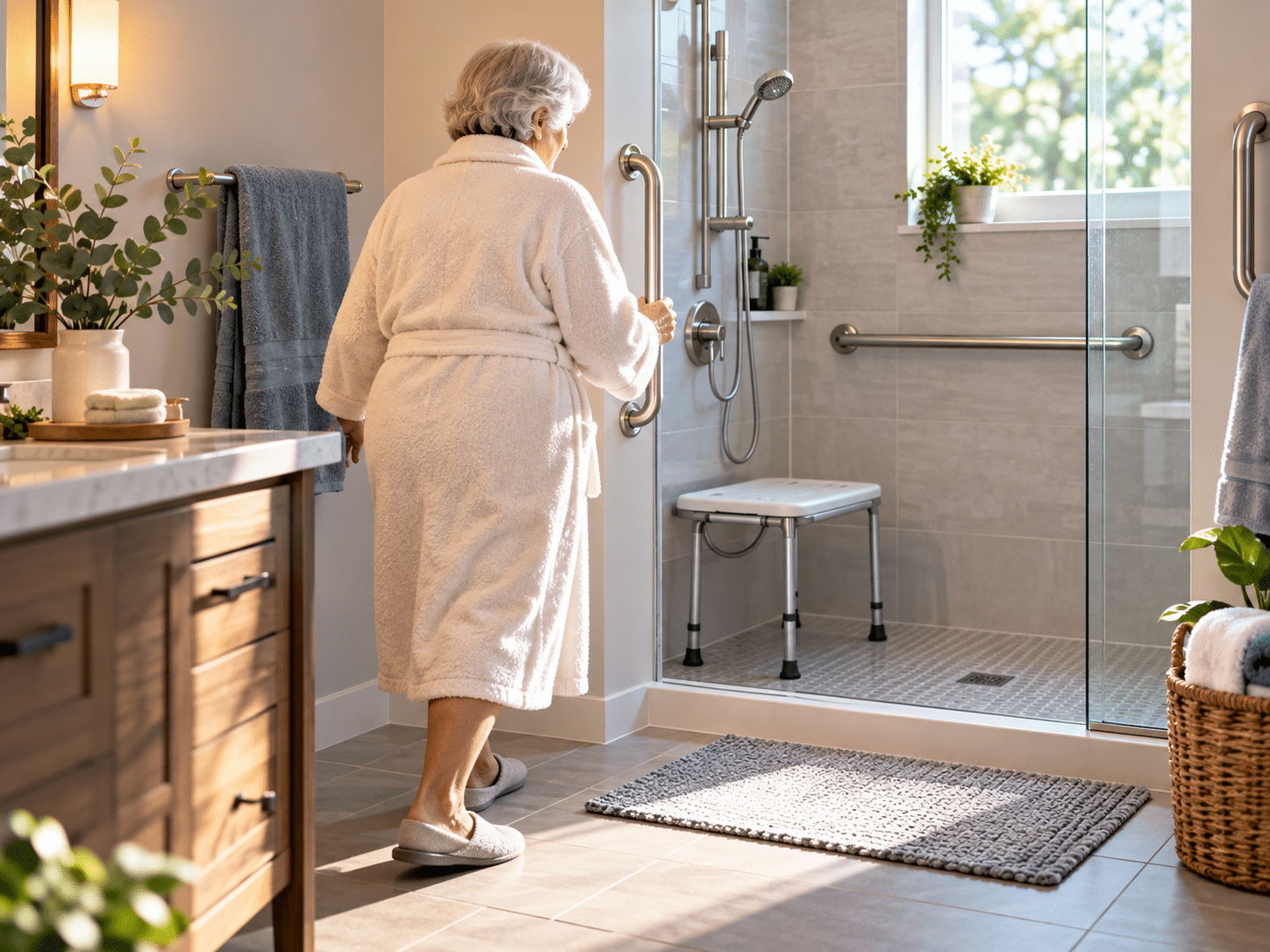
One of the simplest ways to improve bathroom safety is to provide secure places to hold when sitting, standing or transferring. Grab bars can be installed around the bathtub or shower and beside the toilet. Their positions should reflect how a person actually moves through the bathroom.
Installation matters just as much as location. Grab bars should be properly positioned and firmly anchored. Towel racks and soap dishes should never be used for support. For older adults experiencing changes in strength or balance, a well-positioned grab bar can provide valuable stability during everyday bathroom activities.
2. Create non-slip bathing surfaces.
Water and smooth bathroom surfaces aren’t a good combination. It’s wise to use non-slip surfaces in the tub or shower. Mats beside the bathtub or shower should also have rubberized or non-skid backing. It’s equally important to wipe up water promptly. A small puddle beside the shower or sink can become a slipping hazard, particularly for someone who has balance difficulties or reduced mobility.
Be mindful of cleaning products as well. Canada’s The Safe Living Guide notes that some tile and bath cleaning products can actually increase slipperiness. During fall and winter, develop the habit of checking floors throughout the home for moisture. Snow, slush and rain tracked indoors can create additional slippery surfaces before someone even reaches the bathroom.
3. Use a bath or shower seat.
Standing for the entire duration of a shower can be tiring for someone with limited strength, endurance or balance. A bath or shower seat allows a person to remain seated while bathing. Canada’s Safe Living Guide specifically recommends considering a bath seat when standing in the shower or lowering into a bathtub is difficult.
A hand-held shower head can make the arrangement even more convenient, allowing the user to direct the water while remaining seated. These relatively straightforward home and bathroom modifications can make personal care more comfortable while reducing the amount of standing, reaching and turning required on a wet surface.
4. Make the toilet easier to use.
Getting on and off a low toilet can become difficult as leg strength and mobility change. A raised toilet seat may reduce the distance bathroom users need to lower and lift themselves. Canada’s Safe Living Guide notes that raised toilet seats of approximately 10 to 15 centimetres can make getting on and off the toilet easier. Grab bars or appropriate safety rails can provide additional support.
There are several styles of bathroom safety equipment available, so the right choice should be based on the individual’s needs and the bathroom’s layout. An Occupational Therapist can also provide valuable input when determining which equipment or modifications may be appropriate.
5. Improve the bathroom lighting.
Good visibility is important, especially during nighttime bathroom visits. Canada’s Safe Living Guide recommends having a night light in the bathroom. Health Canada advises older adults to maintain good lighting throughout the home and keep the route between the bedroom and bathroom clear.
Consider the entire journey from the bed to the bathroom. Loose rugs, electrical cords, clutter and poorly illuminated hallways can all create unnecessary obstacles. This becomes particularly relevant during fall and winter in Toronto, when daylight hours become shorter and people spend more time indoors.
Frequently Asked Questions (FAQs).
Why are bathrooms a fall risk for seniors?
Bathrooms combine wet, potentially slippery surfaces with hard fixtures and movements such as stepping, turning, sitting and standing. Reduced balance, strength or mobility can make these tasks more difficult.
Where should grab bars be installed?
Grab bars are commonly installed in or around the bathtub or shower and beside the toilet. Placement should suit the user’s needs. The bars should be securely anchored rather than attached in a way that cannot safely support the user.
Are towel racks safe to use as grab bars?
No. Canada’s Safe Living Guide specifically warns against using towel racks or soap dishes for support. Properly installed grab bars are designed for this purpose.
Can a shower chair help prevent falls?
A suitable shower or bath seat can reduce the need to stand throughout bathing and may help people who have difficulty standing or lowering themselves into a bathtub. The appropriate equipment depends on the individual’s abilities and bathroom setup.
Are bathroom rugs safe for seniors?
Loose rugs can create tripping or slipping hazards. Mats used beside the tub or shower should have rubberized or non-skid backing and remain securely in place.
When should families consider bathroom modifications?
Consider an assessment when someone begins having difficulty getting into the bathtub or shower, standing while bathing, getting on or off the toilet, or maintaining balance. It’s often better to address these concerns proactively rather than waiting for a fall.
Who can help choose bathroom safety equipment in the GTA?
LifeCare Mobility Solutions has been helping families throughout Scarborough, Toronto and the Greater Toronto Area with mobility and accessibility solutions for more than 15 years. As a locally owned and family-operated business established in 2010, we provide products, in-home consultations and equipment maintenance while working closely with Occupational Therapists and community-based agencies throughout the GTA.
We proudly help families explore mobility and accessibility products suited to their needs and home environment. Our home and bathroom modifications include grab bars, raised toilet seats, shower chairs, night lights, transfer benches, bath lift chairs and so much more! To learn more, please don’t hesitate to call us at 416-267-9800 or email us at info@lifecaremobility.ca. You may also contact us by filling out the form on our Contact page!